Names
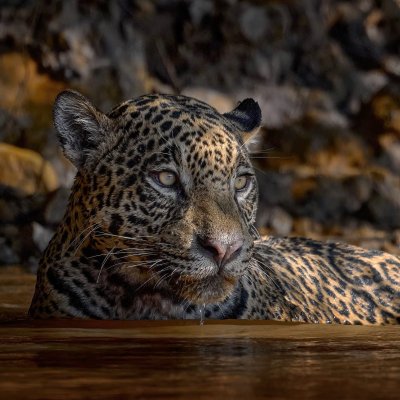
Every jaguar in the area has its own unique story. Thanks to the Jaguar Identification Project (JIP), individual animals have been identified for more than twenty years by the unique pattern of rosettes on their coat.
What started as a simple photo catalog has gradually become one of the most detailed databases of wild big cats in the world. For the registered, named jaguars, scientists and photographers track not just movement and territory, but also family ties — siblings, mothers, cubs, partners, and the fates of successive generations as their habitat and conditions change.
Every year an updated digital guide in PDF form is published for the Rio Cuiabá area and its tributaries, adding newly discovered individuals, territorial changes, and new family relationships. It's fascinating to read who's related to whom, how old individual jaguars get, and to trace their sighting locations on a map.
You might learn, for instance, that the male jaguar Ousado had burned paws after the 2020 fires, allowed himself to be rescued, ended up at a rehabilitation center where he recovered quickly, and was released back into the wild with a tracking collar — where he's now doing wonderfully. I'll save the details for a separate story, but I can already say we got to check his paws while photographing him, and he's doing great!
Anyone can take part in the project — all you need is a photo of the jaguar's left or right side along with the location and date of the sighting. Every photograph can help confirm an animal's identity. You can add another chapter to the story of one of the best-studied jaguar populations in the world.
We very nearly got to name a jaguar ourselves. In the farthest spot we'd ever reached on the river, we found a hidden three-month-old cub that no one recognized. There's a rule here — whoever's boat finds an unnamed jaguar gets to name it. Unfortunately the cub was so well hidden that, while we did get a photo, it lacked the identifying marks needed for future recognition. But plenty of name suggestions came pouring out of our group anyway.
Naturally, my own view was that the name for the jaguar cub should somehow relate to our expedition's art director!
Proceeds from guide sales and donations support jaguar conservation, camera-trap research, education for local communities, and cooperation with ranchers. Thanks to that, Porto Jofre has become not just a world paradise for photographers, but also a model for successfully combining ecotourism, citizen science, and conservation.
Gone, thankfully, are the days — and not so long ago — when jaguar pelts were sold to poachers for as much as $2,000. Hunting jaguars was banned here in 1967, but poaching continued right up into the 1980s.
Jaguár americký (Panthera onca) Jaguar, Rio Cuiaba, Mato Grosso, Brazílie (Apeiara)
Ondřej Prosický | www.NaturePhoto.cz, Sony ILCE-1, Sony FE 300mm F2.8 GM OSS + 2X Teleconverter, f/6.3, @1/1000 s, ISO 400, sobota 25. července 2026 9:00:55, 2026-7-0792.jpg


 Brazílie
Comments
(0 posts) Add comment