Orchid Photography on the Island of Rhodes

Being the perfect guide for clients with cameras in interesting corners of Europe that I have never visited before takes quite a bit of courage. Without my own drive to explore and discover beautiful new places first, it simply wouldn’t work. I had already had similar success searching for wild terrestrial orchids on Sicily and Crete, to everyone’s satisfaction, so I wasn’t worried about Rhodes at all. I prepared the locations and ideal bases for accommodation for this April’s trip as early as last summer. As it turned out, that was a very lucky decision. We were a little unlucky with a weaker flowering season. We did find all the target species flowering at the right time, but there were no vast carpets of orchids where you could hardly find a place to put your foot down.

After the Storm


We arrived on the island of Rhodes shortly after a major Mediterranean storm named Erminio, which hit Greece at the beginning of April.

Even during our connection in Athens, they wouldn’t let us off the plane in the pouring rain because the passenger boarding bridge was swaying so violently in the wind that it couldn’t be connected to our Airbus. It was actually a miracle that the pilot managed to land in the storm at all – many flights were cancelled that day.

In a single day, the amount of rain that fell was equivalent to several weeks’ worth of precipitation, and flash floods inundated streets and buildings. The winds from Africa also brought Saharan dust with them – you can even see it in detail on the mirrors of the Ophrys orchids. As a result, the rain sometimes looked more like liquid mud than a spring shower, and the sky turned deep red in the evening.

On Rhodes, the roads were left covered with deposits of mud, stones, leaves, cones and pine needles washed down from the hills. Although the island has exceptionally well-maintained roads, I had to drive carefully and constantly avoid obstacles. At one point, I even drove our rented minivan through a river, as if we were somewhere in the Okavango. In some places, infrastructure and internet services were down – which was probably what bothered the clients most.

The landscape was thoroughly soaked. But this wild combination of the elements triggered an explosion of life – within just a few days, the dry slopes were transformed into an ideal habitat for flowering orchids.

The only problem was that the rainfall could have come a few days earlier – or we should have stayed longer to see the fresh flowers at their best.

 
Tořič brvitý krále Ferdinanda (Ophrys regis-ferdinandii / Ophrys speculum ssp. Regis-ferdinandii) Ferdinand's Bee Orchid, Kattavia, Rhodos, Řecko
Ondřej Prosický | www.NaturePhoto.cz, Sony ILCE-1, Sony FE 100mm F2.8 Macro GM OSS, f/4.0, @1/20 s, ISO 160, pondělí 6. dubna 2026 6:37:52, 2026-4-2190.jpg
Rudohlávek jehlancovitý (Anacamptis pyramidalis) Pyramidal Orchi, Faliraky, Rhodos, Řecko
Ondřej Prosický | www.NaturePhoto.cz, Sony ILCE-1, Laowa 15mm f/4 Wide Angle Macro 1:1 Shift, f/4, @1/1600 s, ISO 100, pondělí 6. dubna 2026 5:16:37, 2026-4-2124.jpg

When and Where

Because Rhodes is tiny compared with Sicily, and even with Crete, I was determined to visit all the interesting orchid habitats on the island. I even added an extra day to the already fully booked expedition after discussing it with the clients.

As with my previous orchid trips to places I had never visited before, I gathered information from reports by wild-plant enthusiasts from across Europe, from the book Orchideen auf Rhodos by Horst and Gisela Kretzschmar and Wolfgang Eccarius, and from observations recorded on iNaturalist. I fed all the useful data – species, flowering periods, abundance and locations – into AI (ChatGPT), and we had a little chat about the resulting itinerary.

The goal was to find attractive target species at accessible and beautiful locations without long hikes (ideally right next to the parked car), places with as many species and individual plants as possible in a small area, viewpoints facing sunrise or sunset, and locations close to somewhere we could have lunch.

And it was a good thing I had done all that preparation the year before.

iNaturalist is a great resource. Thanks to its huge community, you can find the exact locations of interesting observations. But only until someone decides to hide those precise locations, perhaps for conservation reasons. And that is exactly what apparently happened sometime around the turn of the year with all orchids (Orchidaceae) throughout Greece.

The precise location “pins” were replaced by a scattered handful of vague locations, some of them even appearing in the middle of the Aegean Sea. When I discovered this a month before departure – I just wanted to check how the orchid season was getting started there – I was disappointed.

Although, fortunately, I already had all the information I needed.

 
Tořič krétský (Ophrys cretica / O. c. beloniae) Crete bee-orchi, Kattavia, Rhodos, Řecko
Ondřej Prosický | www.NaturePhoto.cz, Sony ILCE-1, Sony FE 100mm F2.8 Macro GM OSS, f/5.6, @1/200 s, ISO 200, pátek 3. dubna 2026 6:40:40, 2026-4-0828.jpg
Tořič pupkatý (Ophrys umbilicata ssp. umbilicata) Navel bee-orchid, Kattavia, Rhodos, Řecko
Ondřej Prosický | www.NaturePhoto.cz, Sony ILCE-1, Sony FE 100mm F2.8 Macro GM OSS, f/3.2, @1/640 s, ISO 100, pátek 3. dubna 2026 16:55:09, 2026-4-1604.jpg


I am incredibly grateful that a regular core group of photographers keeps joining me on my orchid trips around Europe. They already know exactly what they are getting into. Anyone who travels with me in search of nature has already realised that being outdoors is what matters most to me.

I’ll head out for that first half-hour before sunrise even in heavy rain, because what if the clouds suddenly break for a few minutes and the orange sun shines onto the wet flowers? It is hardly unusual for me to suggest to clients – and occasionally persuade them a little – that there is no time for lunch because we would have to turn back, while there are still two more locations further on with this species and that species, and we simply have to explore them, even if only briefly.

If you want to join me next time, be prepared to get up at 5:40 a.m. so that we can leave around 6:10. It usually starts getting light at about 6:50, but it is best to be at the first flowers by 6:20 at the latest. That gives you time to look around and decide which of the most beautiful flowers will catch the first rays of sunlight, or to photograph a flower with the sun in the background.

By around 9 a.m., the light will already be a little too harsh and white (awful!), so it’s time for breakfast. We either bring something with us or drive to a village for coffee. During the day, we focus more on exploring new locations and finding the best spot for evening photography and sunset. We can usually find an open restaurant where we can enjoy a relaxed lunch – the only proper hot meal of the day.

Occasionally – and this year there was actually a demand from the clients for more of these “lazy days” – we head back to our accommodation after the morning photography session for a “hearty breakfast-lunch” followed by a siesta, perhaps by the pool. We then go back into the field in the afternoon, with just a short stop for dinner, making sure we are back among the orchids in time for the final hour of daylight and sunset.

Tořič kalypso (Ophrys calypsus / Ophrys heldreichii ssp. calypsus ) Calypso bee-orchid, Kattavia, Rhodos, Řecko
Ondřej Prosický | www.NaturePhoto.cz, Sony ILCE-1, Sony FE 100mm F2.8 Macro GM OSS, f/5.0, @1/800 s, ISO 400, pátek 3. dubna 2026 16:12:24, 2026-4-1476.jpg
Tořič pupkatý (Ophrys umbilicata ssp. umbilicata) Navel bee-orchid, Kattavia, Rhodos, Řecko
Ondřej Prosický | www.NaturePhoto.cz, Sony ILCE-1, Sony FE 100mm F2.8 Macro GM OSS, f/2.8, @1/2000 s, ISO 200, pátek 3. dubna 2026 6:46:42, 2026-4-0838.jpg

Hairy Danger

Apart from the fact that there were no vast carpets of orchids this year, the places where we did find larger concentrations – and suspected we might want to return to them – would have been worth keeping an eye on.

I knew that stray animals could pose a danger to flowers at Mediterranean locations. In Crete, we had to deal with goats, in Sicily with sheep, and on Gargano with cattle. On Rhodes, we gained a new enemy: the fallow deer (Dama dama)!

You may think I’m joking, but I was genuinely shocked on the very day we arrived when I spotted a fallow deer somewhere near Laerma for the first time. And that was only one.

When we were in the south, we saw entire herds wandering through the orchids or along the edges of villages in the morning and evening.

I remember how, one evening at a beautiful location near Kattavia, we picked out a nice group of Umbilicate Ophrys (Ophrys umbilicata) growing in a clear patch of ground with no other vegetation. It was perfectly positioned for the first rays of morning sunlight, so we planned to return under ideal conditions.

Fat chance. The next morning, the fallow deer were already in sight, and there were droppings around the remaining third of the stems. The flowers had been eaten.

Bastards!

Where did this sneaky animal come from? I did a little digging into the history of fallow deer on Rhodes.

I quote: “...in the Middle Ages, fallow deer were brought to Rhodes on the advice of the Oracle of Delphi to help the locals get rid of snakes.” Seriously!

Apparently, the deer were supposed to “repel snakes with the smell of their urine”. More fallow deer were later introduced by the Knights Hospitaller as game animals, but fortunately, the species was completely eradicated from the island during the Ottoman wars.

Unfortunately, when the island became Italian after 1912, the Italians introduced fallow deer again. Semi-tame animals lived in the moat around the Old Town, while some escaped and others were released. According to information from 2022, one fallow deer could supposedly be seen in the forests near Laerma, while dozens more supposedly lived in a fenced reserve bordering the canyon in Rodini Park.

No way. Hundreds of fallow deer roam freely across the south of the island, according to our observations, often in groups of up to 12 animals – and they are eating the orchids!

Tořič Omega (Ophrys omegaifera) Omega bee-orchid, Nectarios, Rhodos, Řecko
Ondřej Prosický | www.NaturePhoto.cz, Sony ILCE-1, Sony FE 100mm F2.8 Macro GM OSS, f/2.8, @1/640 s, ISO 400, pondělí 6. dubna 2026 9:18:32, 2026-4-2226.jpg
Serapie štíhlá (Serapias bergonii) Bergon's Tongue-orchid, Kolymbia, Rhodos, Řecko Ondřej Prosický | www.NaturePhoto.cz, Sony ILCE-1, Meyer-Optik Gorlitz Trioplan 100 mm f/2,8
, f/2.9, @1/125 s, ISO 200, úterý 7. dubna 2026 16:24:17, 2026-4-2656.jpg

Where Next?

As with several of my previous orchid trips, I find myself thinking that I could have stayed on the island longer and taken things a little more slowly. Even though we managed to see a lot, there were places where we could have explored further, stayed longer, or returned under better light. If you are interested in joining me for another orchid trip to Rhodes, let me know. I would like to return next year and I’ll work something out.

For my regular group of photographer-travellers, however, I am already planning something completely new. How about exploring orchids in Georgia, Albania or southern Portugal? I already have a pile of notes and a stack of books on my desk as I try to decide which corner of Europe will offer the most interesting and accessible orchid photography.

The complete list of orchid species photographed during the 1–8 April 2026 trip can be found at the very end of the article. Once again, please bear with my approach to orchid nomenclature, which is hardly an exact science. I am rather conservative and do not treat subspecies as separate species. For clarity, however, I have added the alternative names where applicable.

Many thanks to my fellow travellers for the wonderful time among the orchids. I really enjoyed having you along, and I hope to see you somewhere again next time!

Tořič phryganový (Ophrys lutea phryganae / O. phryganae) Phrygana yellow bee-orchid, Kattavia, Rhodos, Řecko
Ondřej Prosický | www.NaturePhoto.cz, Sony ILCE-1, Sony FE 100mm F2.8 Macro GM OSS, f/5.0, @1/800 s, ISO 800, pátek 3. dubna 2026 6:20:16, 2026-4-0794.jpg
Tořič pupkatý (Ophrys umbilicata ssp. umbilicata) Navel bee-orchid, Kattavia, Rhodos, Řecko
Ondřej Prosický | www.NaturePhoto.cz, Sony ILCE-1, Meyer-Optik Gorlitz Trioplan 100 mm f/2,8, f/2.9, @1/5000 s, ISO 100, sobota 4. dubna 2026 6:14:35, 2026-4-1625.jpg
Rudohlávek jehlancovitý (Anacamptis pyramidalis) Pyramidal Orchid, Faliraky, Rhodos, Řecko
Ondřej Prosický | www.NaturePhoto.cz, Sony ILCE-1, Sony FE 100mm F2.8 Macro GM OSS, f/4.0, @1/10 s, ISO 100, úterý 7. dubna 2026 7:00:31, 2026-4-2532.jpg
Tořič podkovovitý (Ophrys ferrum-equinum) Horseshoe bee-orchid, Attavyros, Rhodos, Řecko
Ondřej Prosický | www.NaturePhoto.cz, Sony ILCE-1, Sony FE 100mm F2.8 Macro GM OSS, f/2.8, @1/30 s, ISO 100, sobota 4. dubna 2026 14:30:08, 2026-4-1822.jpg
Tořič brvitý krále Ferdinanda (Ophrys regis-ferdinandii / Ophrys speculum ssp. Regis-ferdinandii) Ferdinand's Bee Orchid, Kattavia, Rhodos, Řecko
Ondřej Prosický | www.NaturePhoto.cz, Sony ILCE-1, Sony FE 100mm F2.8 Macro GM OSS, f/6.3, @1/500 s, ISO 400, pátek 3. dubna 2026 8:56:06, 2026-4-1082.jpg
Vstavač řídkokvětý (Anacamptis laxiflora) Loose-flowered orchid, Laerma, Rhodos, Řecko
Ondřej Prosický | www.NaturePhoto.cz, Sony ILCE-1, Sony FE 100mm F2.8 Macro GM OSS, f/3.2, @1/80 s, ISO 400, sobota 4. dubna 2026 17:00:07, 2026-4-1907.jpg
Vstavač mléčný (Neotinea lactea) Milky Orchid, Profitis Illias, Rhodos, Řecko
Ondřej Prosický | www.NaturePhoto.cz, Sony ILCE-1, Sony FE 100mm F2.8 Macro GM OSS, f/3.5, @1/400 s, ISO 400, pondělí 6. dubna 2026 11:06:14, 2026-4-2250.jpg
Tořič phryganový (Ophrys lutea phryganae / O. phryganae) Phrygana yellow bee-orchid, Kattavia, Rhodos, Řecko
Ondřej Prosický | www.NaturePhoto.cz, Sony ILCE-1, Sony FE 100mm F2.8 Macro GM OSS, f/2.8, @1/1250 s, ISO 100, pátek 3. dubna 2026 16:43:04, 2026-4-1492.jpg
Tořič Reinholdův (Ophrys reinholdii) Diamond Orchid, Profitis Illias, Rhodos, Řecko
Ondřej Prosický | www.NaturePhoto.cz, Sony ILCE-1, Sony FE 100mm F2.8 Macro GM OSS, f/5.6, @1/8 s, ISO 100, pondělí 6. dubna 2026 15:30:41, 2026-4-2482.jpg
Vstavač motýlovitý (Anacamptis papilionacea) Pink butterfly orchid, Kolymbia, Rhodos, Řecko
Ondřej Prosický | www.NaturePhoto.cz, Sony ILCE-1, Meyer-Optik Gorlitz Trioplan 100 mm f/2,8, f/2.9, @1/320 s, ISO 400, úterý 7. dubna 2026 17:21:01, 2026-4-2718.jpg
Vstavač kukačka kavkazský (Anacamptis morio ssp. caucasica) Caucasian green-winged orchid, Profitis Illias, Rhodos, Řecko
Ondřej Prosický | www.NaturePhoto.cz, Sony ILCE-1, Sony Sony FE 50mm F2.5 G, f/4.0, @1/100 s, ISO 400, úterý 7. dubna 2026 12:25:38, 2026-4-2589.jpg
Tořič heldreichův (Ophrys heldreichii) Heldreich's bee Orchid, Kattavia, Rhodos, Řecko
Ondřej Prosický | www.NaturePhoto.cz, Sony ILCE-1, Sony FE 100mm F2.8 Macro GM OSS, f/2.8, @1/1600 s, ISO 400, pátek 3. dubna 2026 13:18:43, 2026-4-1211.jpg
Tořič bělostný (Ophrys candica / Ophrys fuciflora ssp. candica) White bee-orchid, Attavyros, Rhodos, Řecko
Ondřej Prosický | www.NaturePhoto.cz, Sony ILCE-1, Sony FE 100mm F2.8 Macro GM OSS, f/3.5, @1/160 s, ISO 400, sobota 4. dubna 2026 8:52:48, 2026-4-1675.jpg
Serapie štíhlá (Serapias bergonii) Bergon's Tongue-orchid, Kattavia, Rhodos, Řecko
Ondřej Prosický | www.NaturePhoto.cz, Sony ILCE-1, Sony FE 100mm F2.8 Macro GM OSS, f/2.8, @1/125 s, ISO 250, sobota 4. dubna 2026 5:04:49, 2026-4-1614.jpg
Tořič střečkonosný (Ophrys oestrifera / Ophrys oestrifera cornutula) Horned orchid, Kattavia, Rhodos, Řecko
Ondřej Prosický | www.NaturePhoto.cz, Sony ILCE-1, Sony FE 100mm F2.8 Macro GM OSS, f/3.5, @1/500 s, ISO 250, pátek 3. dubna 2026 16:02:11, 2026-4-1385.jpg
Aceras podivný (Orchis anthropophora) Common man orchid, Profitis Illias, Rhodos, Řecko
Ondřej Prosický | www.NaturePhoto.cz, Sony ILCE-1, Laowa 15mm f/4 Wide Angle Macro 1:1 Shift, f/4, @1/125 s, ISO 400, pondělí 6. dubna 2026 11:52:02, 2026-4-2325.jpg
Tořič Omega (Ophrys omegaifera) Omega bee-orchid, Nectarios, Rhodos, Řecko
Ondřej Prosický | www.NaturePhoto.cz, Sony ILCE-1, Sony FE 100mm F2.8 Macro GM OSS, f/2.8, @1/640 s, ISO 400, pondělí 6. dubna 2026 9:18:32, 2026-4-2226.jpg
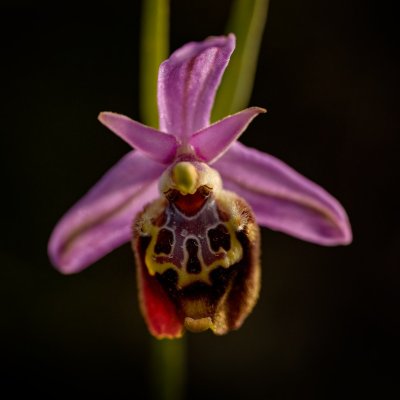
Tořič duhový (Ophrys iricolor / Ophrys fusca iricolor) Rainbow bee-orchid, Kattavia, Rhodos, Řecko
Ondřej Prosický | www.NaturePhoto.cz, Sony ILCE-1, Sony FE 100mm F2.8 Macro GM OSS, f/3.2, @1/800 s, ISO 200, pátek 3. dubna 2026 7:31:44, 2026-4-0862.jpg
Tořič podkovovitý (Ophrys ferrum-equinum), Horseshoe bee-orchid, Attavyros, Rhodos, Řecko
Ondřej Prosický | www.NaturePhoto.cz, Sony ILCE-1, Sony FE 100mm F2.8 Macro GM OSS, f/2.8, @1/640 s, ISO 400, sobota 4. dubna 2026 13:47:55, 2026-4-1791.jpg
Tořič pupkatý (Ophrys umbilicata ssp. umbilicata) Navel bee-orchid, Kattavia, Rhodos, Řecko
Ondřej Prosický | www.NaturePhoto.cz, Sony ILCE-1, Sony FE 100mm F2.8 Macro GM OSS, f/5.0, @1/400 s, ISO 400, pátek 3. dubna 2026 8:24:01, 2026-4-1021.jpg
Vstavač anatolský (Orchis anatolica) Anatolian orchis, Attavyros, Rhodos, Řecko
Ondřej Prosický | www.NaturePhoto.cz, Sony ILCE-1, Sony FE 100mm F2.8 Macro GM OSS, f/3.2, @1/125 s, ISO 200, sobota 4. dubna 2026 9:28:01, 2026-4-1695.jpg
Tořič rhodský (Ophrys rhodia / Ophrys umbilicata ssp. rhodia) Rhodes bee-orchid, Kolymbia, Kattavia, Rhodos, Řecko
Ondřej Prosický | www.NaturePhoto.cz, Sony ILCE-1, Sony FE 100mm F2.8 Macro GM OSS, f/5.0, @1/125 s, ISO 400, neděle 5. dubna 2026 16:03:44, 2026-4-1992.jpg
Společnou fotku jsme v terénu přes atraktivní podněty nestihli, tedy až před návratem u bazénu na našem bydlení.
Zleva, Ondra, Alena, Emil, Radu, Kuba, Káťa, Jirka a Dana.
Kolymbia, Rhodos, Řecko, 8. dubna 2026

Orchideje na ostrově Rhodos, 4-2026, 1. - 8. dubna 2026

Tořič podkovovitý (Ophrys ferrum-equinum), horseshoe bee-orchid (Attavyros)
Tořič brvitý krále Ferdinanda (Ophrys regis-ferdinandii / Ophrys s ssp. regis-ferdinandii) Ferdinand's Bee Orchid
Tořič kalypso (Ophrys calypsus / Ophrys h. ssp. calypsus ) calypso bee-orchid (Kattavia)
Tořič bělostný (Ophrys candica / Ophrys fuciflora ssp. candica) White bee-orchid (Attavyros)
Tořič rhodský (Ophrys rhodia / Ophrys umbilicata ssp. rhodia) Rhodes bee-orchid (Kattavia)
Tořič pupkatý (Ophrys umbilicata ssp. umbilicata) Navel bee-orchid (Kattavia)
Tořič krétský (Ophrys cretica / O. c. beloniae) Crete bee-orchid (Kattavia)
Tořič modropyský (Ophrys speculum) Mirror Orchid (Kattavia)
Tořič střečkonosný (Ophrys oestrifera / Ophrys oestrifera cornutula) Horned orchid (Kattavia)
Tořič trubcovitý (Ophrys bombyliflora) Bumblebee orchid (Laerma)
Tořič Omega (Ophrys omegaifera) Omega bee-orchid (Nectarios)
Tořič heldreichův (Ophrys heldreichii) Heldreich's bee Orchid, (Kattavia)
Tořič duhový (Ophrys iricolor / Ophrys fusca iricolor) Rainbow bee-orchid (Kattavia)
Tořič sicilský (Ophrys sicula) Lesser Yellow bee-orchid (Kattavia)
Tořič phryganový (Ophrys l. phryganae / O. phryganae) Phrygana yellow bee-orchid (Kattavia)
Tořič Reinholdův (Ophrys reinholdii) Diamond Orchid (Profitis Illias)
Tořič vačnatý pravý (Ophrys mammosa) Mammose bee-orchid (Kolymbia)
Vstavač kukačka (Anacamptis m. ssp. caucasica) Caucasian green-winged orchid. (Profitis Illias)
Vstavač řídkokvětý (Anacamptis laxiflora) Loose-flowered orchid (Laerma)
Vstavač motýlovitý (Anacamptis papilionacea) Pink butterfly orchid (všude, Kolymbia)
Rudohlávek jehlancovitý (Anacamptis pyramidalis) Pyramidal Orchid (Kolymbia, Faliraky)
Vstavač štěničný vonný (Anacamptis fragrans / Anacamptis c. ssp. fragrans) Fragrant bug orchid (Kattavia)
Vstavač anatolský (Orchis anatolica) Anatolian orchis (Attavyros)
Vstavač italský (Orchis italica) Naked man orchid (Kolymbia)
Aceras podivný (Orchis anthropophora) Common man orchid (Profitis Illias)
Vstavač provensálský (Orchis provincialis) Provence orchid (Profitis Illias)
Neotinea skvrnitá (Neotinea maculata) Dense-flowered Orchid (Profitis Illias)
Vstavač mléčný (Neotinea lactea) Milky Orchid (Profitis Illias)
Serapie štíhlá (Serapias bergonii) Bergon's Tongue-orchid (Kattavia)
Serapie malokvětá (Serapias parviflora) Small-flowered Tongue-orchid
Serápie východní karská (Serapias orientalis / S. o. carica) Oriental tongue-orchid (Kattavia)
Barelie statná (Himantoglossum robertianum) Giant orchid (Attavyros)


Photographer
Ondřej Prosický
Ondřej Prosický

focuses on wildlife photography. He wants to capture the behavior of animals in their natural surroundings. Photo workshops and expeditions focusing on nature have been organizing since 2006, publishing in the media and having more than four dozen author exhibitions.

Among his greatest achievements is participation in the finals of the prestigious Wildlife Photographer of the Year photography competition. He has been a member of the Association of Professional Photographers of the Czech Republic since 2009. In May 2011, the European Federation of Professional Photographers awarded Ondřej Prosické the QEP (Qualified European Photographer) title in the Wildlife Photography category, and in the same year he received the FEP Landscape Golden Camera award in Brussels. The most recent awards are the nominations and main prizes of the Czech Press Photo, Czech Nature Photo and the Festival de l'Oiseau et de la Nature in France.

Vloženo
15. 04. 2026 , categories: nature, orchids
Share

Comments

(0 posts)
Add comment

Add comment